Phoenix AwardsPhoenix Awards
Fabryka Norblina: autentyczność, która się bilansuje
Fabryka Norblina: authenticity that balances the books
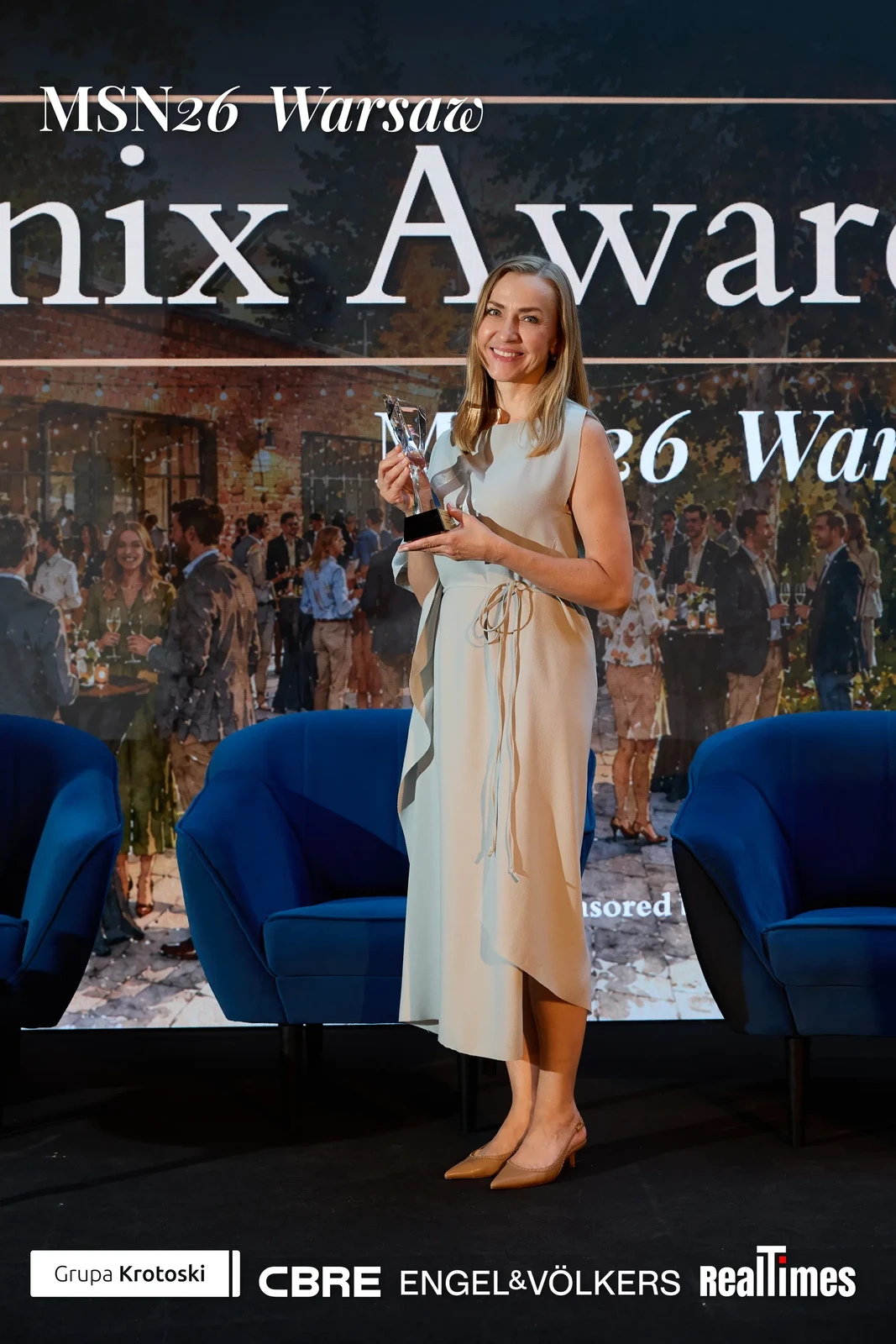
Fabryka Norblina, podwójny laureat Phoenix Awards 2026 (kategorie „Urban Heritage Reincarnation” i „Post-Industrial Urban Rebirth”), pokazuje arytmetykę rewitalizacji od środka: część zabytkowa sama w sobie była nieopłacalna, a mimo to 10 historycznych budynków i 50 maszyn stało się sercem projektu, który wynajął się przed końcem budowy. Profil projektu z komentarzem Marcina Juszczyka z Panelu I MSN26.
Fabryka Norblina, a double Phoenix Awards 2026 laureate (Urban Heritage Reincarnation and Post-Industrial Urban Rebirth), shows the arithmetic of revitalization from the inside: the heritage part alone was unprofitable, yet 10 historic buildings and 50 machines became the heart of a project that leased up before construction ended. A project profile with Marcin Juszczyk's Panel I perspective.
Redakcja RealTimes · 16 lipca 2026 · 4 min czytania
RealTimes Editorial Desk · 16 July 2026 · 4 min read
TL;DR
- Fabryka Norblina, projekt Capital Park przy Żelaznej, została podwójnym laureatem Phoenix Awards 2026, z nagrodami w kategoriach „Urban Heritage Reincarnation” oraz „Post-Industrial Urban Rebirth”; statuetki wręczono podczas MSN26, 16 lipca 2026 roku, w B'Fort na terenie Fortu Mokotów w Warszawie.
- Kompleks zachował 10 historycznych budynków i 50 maszyn, z których 42 wpisano indywidualnie do rejestru zabytków; łącznie to blisko 66 tys. mkw. powierzchni najmu, w tym prawie 42 tys. mkw. biur klasy A.
- Podczas Panelu I MSN26 Marcin Juszczyk, partner zarządzający i wiceprezes zarządu Capital Park, mówił wprost: część zabytkowa sama się nie spina, to element komercyjny i sens całości domykają bilans.
Warszawa, 16 lipca. W arkuszu kalkulacyjnym najcenniejsza część Fabryki Norblina wygląda najgorzej: sama rewitalizacja zabytkowej substancji nigdy by się nie spięła. A jednak to właśnie ona zdecydowała o charakterze projektu, który podczas MSN26 w B'Fort na terenie Fortu Mokotów odebrał dwie statuetki Phoenix Awards 2026, nagrody RealTimes honorującej najlepsze rewitalizacje w Polsce: w kategoriach „Urban Heritage Reincarnation” oraz „Post-Industrial Urban Rebirth”, obu sponsorowanych przez Engel & Völkers.
Fabryka, która odlała Kopernika
Historia zaczyna się w 1809 roku, gdy brązownik Wincenty Norblin otworzył warsztat na Starym Mieście. W 1882 roku Ludwik Norblin z rodziną i wspólnikiem Teodorem Wernerem kupili posesję przy Żelaznej, gdzie od 1893 roku działała fabryka „Norblin, Bracia Buch i T. Werner”. W 1927 roku zakład zatrudniał ponad 1800 osób, produkując platery i wyroby metalurgiczne; to stąd wyszedł pomnik Mikołaja Kopernika stojący dziś przed Polską Akademią Nauk. Wojna zamknęła ten rozdział: po odmowie podpisania volkslisty przez właściciela Wacława Wernera niemiecki okupant zlikwidował zakład, a bomby spadały na niego we wrześniu 1939 i sierpniu 1944 roku. Po nacjonalizacji produkcja przy Żelaznej wygasła na początku lat 80., a hale zajęło Muzeum Techniki.
Szukamy tego elementu, który gdzieś by nam dał zarobić i zbilansować.
We look for the element that lets us earn and balance the books.
Marcin Juszczyk, Capital Park
Marcin Juszczyk, Capital Park
Capital Park kupił Norblina w 2008 roku; prace konserwatorskie trwały od 2017 do 2021 roku, a kompleks otwarto we wrześniu 2021. Skalę wyzwania oddaje anegdota przywołana podczas Panelu I MSN26: konserwator zaczął od zdania, że „to jest Wawel”, więc nic się nie da zrobić; skończyło się na kilkunastu tomach wytycznych.
Co zrobić, gdy zabytek się nie spina?
Juszczyk mówił o tym na panelu bez ogródek: „jest część zabytkowa i jej przebudowa, rewitalizacja kosztuje tyle, że sama w sobie byłaby to nieopłacalna część projektu”. Gdyby policzyć same 10 budynków historycznych i rewitalizację 50 maszyn, wynik byłby ujemny. Dlatego, jak dodawał, „szukamy tego elementu, który gdzieś by nam dał zarobić i zbilansować”.
Chcemy, żeby to był taki hub społeczny.
We want it to be a kind of social hub.
Marcin Juszczyk, Capital Park
Marcin Juszczyk, Capital Park
W Norblinie tym elementem są biura: 41 794 mkw. powierzchni klasy A w projekcie liczącym łącznie 65 591 mkw. powierzchni najmu na blisko dwóch hektarach. Rachunek domknął się szybciej, niż zakładano: jak przypominano podczas Panelu I, projekt wynajął się przed zakończeniem budowy, w środku pandemii, mimo że nie ma w nim mieszkań. Na panelu padła też przestroga: inwestorzy, którzy część zabytkową zostawiają na koniec, zwykle nie mają na nią pomysłu, a to właśnie ona potrafi podnosić wartość nieruchomości.
Hub społeczny zamiast galerii
Gdy Capital Park kupował Norblina, część handlową planowano jeszcze w duchu wielkich galerii: moda na parterze, food court na górze. „Ten model został wywrócony do góry nogami”, mówił Juszczyk. Dziś parter należy do gastronomii i rozrywki, a tradycyjny handel to zaledwie kilka procent projektu. Kotwicą, obok plenerowego muzeum dawnej fabryki, stała się muzyka grana na żywo. „Chcemy, żeby to był taki hub społeczny”, tłumaczył podczas Panelu I.
Program robi resztę. BioBazar na około 2 tys. mkw. skupia blisko 60 wystawców żywności ekologicznej i rzemieślniczej, butikowe kino KinoGram ma 14-metrowy bar, a Food Town jest opisywany w materiałach dewelopera jako największy food hall w Warszawie. Muzeum Fabryki Norblina prowadzi zwiedzających czterema trasami wśród zachowanych maszyn, kolekcji ponad 600 platerów i akumulatora hydraulicznego, jednego z czterech takich urządzeń zachowanych w całej Europie. Przez pierwsze półtora roku od otwarcia kompleks gościł ponad 1000 wydarzeń; zyskał też pierwszy w Polsce automatyczny podziemny parking rowerowy na 96 rowerów i certyfikat BREEAM „Excellent” dla części biurowej.
W 2022 roku Fabryka Norblina zdobyła ULI Europe Awards for Excellence oraz ULI Global Awards for Excellence, a jury doceniło zachowanie autentyczności historycznego miejsca w złożonym procesie deweloperskim. Podczas Panelu I MSN26 kilka razy wracała myśl, że trudne dzieci kocha się bardziej. Fabryka Norblina, w której najdroższa część była z definicji nieopłacalna, jest tej myśli najlepszym dowodem: im trudniejszy projekt, tym mocniej się go potem pamięta. I tym bardziej kocha.
TL;DR
- Fabryka Norblina, Capital Park's project on Żelazna Street, is a double Phoenix Awards 2026 laureate, winning both the Urban Heritage Reincarnation and the Post-Industrial Urban Rebirth categories; the statuettes were presented during MSN26 on 16 July 2026 at B'Fort, Fort Mokotów, Warsaw.
- The complex preserves 10 historic buildings and 50 machines, 42 of them individually entered in Poland's register of monuments; in total nearly 66,000 sqm of leasable space, including almost 42,000 sqm of Class A offices.
- At MSN26 Panel I, Marcin Juszczyk, Managing Partner and Vice President of the Management Board at Capital Park, was blunt: the heritage part alone does not pay, the books are closed by the commercial element and the sense of the whole.
Warsaw, 16 July. In a spreadsheet, the most precious part of Fabryka Norblina looks the worst: revitalizing the heritage fabric alone would never have paid. And yet it is that very part that defined the character of the project which, during MSN26 at B'Fort, Fort Mokotów, received two Phoenix Awards 2026 statuettes, in the Urban Heritage Reincarnation and Post-Industrial Urban Rebirth categories, both sponsored by Engel & Völkers. The awards are presented by RealTimes to honour the best revitalizations in Poland.
The factory that cast Copernicus
The story begins in 1809, when bronze smith Wincenty Norblin opened a workshop in Warsaw's Old Town. In 1882 Ludwik Norblin, his family and partner Teodor Werner bought the property on Żelazna Street, where from 1893 the "Norblin, Buch Brothers & Werner" factory operated. By 1927 the plant employed over 1,800 people, producing silver-plated tableware and metallurgical goods; the monument of Mikołaj Kopernik that stands today in front of the Polish Academy of Sciences came out of this factory. The war closed that chapter: after owner Wacław Werner refused to sign the Volksliste, the German occupiers liquidated the plant, and bombs fell on it in September 1939 and August 1944. After nationalisation, production on Żelazna Street wound down in the early 1980s, and the halls were taken over by the Museum of Technology.
Szukamy tego elementu, który gdzieś by nam dał zarobić i zbilansować.
We look for the element that lets us earn and balance the books.
Marcin Juszczyk, Capital Park
Marcin Juszczyk, Capital Park
Capital Park bought Norblin in 2008; conservation works ran from 2017 to 2021, and the complex opened in September 2021. The scale of the challenge is captured by an anecdote recalled during MSN26 Panel I: the conservator opened with the sentence that "this is Wawel," so nothing could be done; it ended with more than a dozen volumes of guidelines.
What do you do when heritage does not pay?
Juszczyk did not sugar-coat it on the panel: "there is a heritage part, and its reconstruction, its revitalization, costs so much that on its own it would be an unprofitable part of the project." Counting only the 10 historic buildings and the restoration of 50 machines, the result would be negative. Which is why, as he added, "we look for the element that lets us earn and balance the books."
Chcemy, żeby to był taki hub społeczny.
We want it to be a kind of social hub.
Marcin Juszczyk, Capital Park
Marcin Juszczyk, Capital Park
At Norblin that element is the offices: 41,794 sqm of Class A space in a project totalling 65,591 sqm of leasable area on almost two hectares. The books closed faster than assumed: as Panel I recalled, the project leased up before construction finished, in the middle of the pandemic, even though it has no apartments. The panel also carried a warning: investors who leave the heritage part for last usually have no idea what to do with it, yet it is precisely that part that can raise a property's value.
A social hub instead of a mall
When Capital Park bought Norblin, the retail component was still planned in the language of the big malls: fashion on the ground floor, a food court upstairs. "That model was turned completely upside down," Juszczyk said. Today the ground floor belongs to gastronomy and entertainment, and traditional retail is a low single-digit share of the project. The anchor, alongside the open-air museum of the old factory, became live music. "We want it to be a kind of social hub," he explained during Panel I.
The program does the rest. BioBazar gathers close to 60 organic and artisanal food exhibitors on around 2,000 sqm, the boutique KinoGram cinema runs a 14-metre bar, and Food Town is described in the developer's materials as the largest food hall in Warsaw. The Norblin Factory Museum guides visitors along four trails among the preserved machines, a collection of over 600 pieces of silver-plated tableware and a hydraulic accumulator, one of only four such devices preserved in all of Europe. In its first year and a half the complex hosted more than 1,000 events; it also gained Poland's first automated underground bicycle parking for 96 bikes and a BREEAM "Excellent" certificate for the office section.
In 2022 Fabryka Norblina won the ULI Europe Awards for Excellence and the ULI Global Awards for Excellence, with the jury commending the authenticity of the historic site maintained through a complex development process. During MSN26 Panel I one image kept returning: you love the difficult children more. Fabryka Norblina, where the most expensive part was by definition unprofitable, is the best proof of that image: the tougher the project, the more strongly you remember it afterwards. And the more you come to love it.