
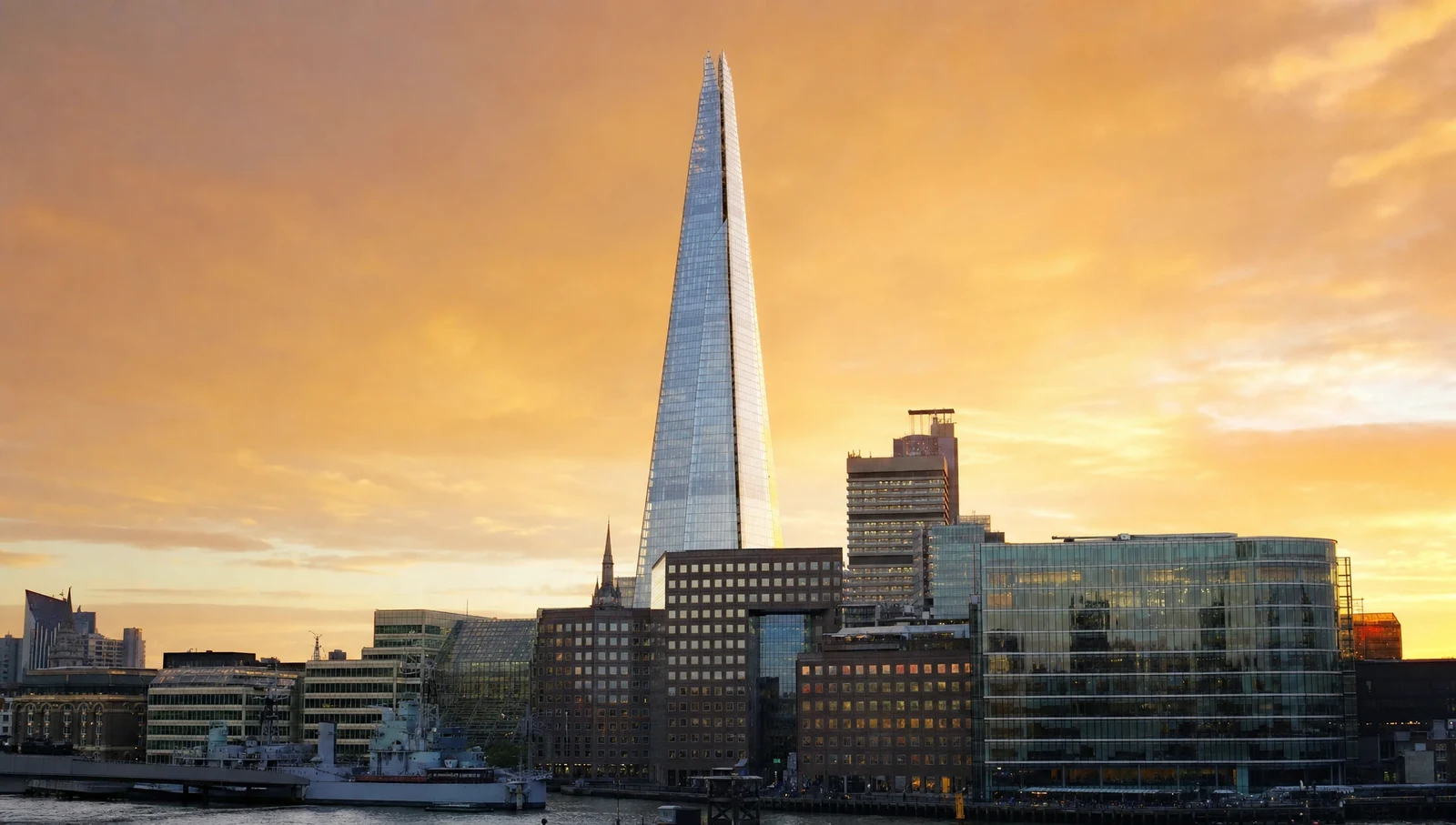
TL;DR
- The City of London has consented a 309.6 metre tower at 1 Undershaft, now marketed as One London. The Council on Vertical Urbanism measures The Shard at 306 metres, so London's fourteen year ceiling is set to be broken by 3.6 metres, not matched.
- The Corporation consented more than 500,000 sqm of offices in 2025, its busiest planning year in a decade, against Grade A tower vacancy of 1.9% to 2.6%. Roughly half of that consented space is already on site.
- The consents are ahead of the politics. Inspectors sat at Guildhall on 2 and 3 September 2026 to retest the City's tall building contours after a ministerial direction, and the Mayor's draft London Plan would pull every building above 100 metres into a City Hall regime.
London's tallest building has not changed since 2012, and the number attached to it is wrong in most places it appears. The Shard is routinely quoted at 309.6 metres. The Council on Vertical Urbanism, the renamed CTBUH and the reference the industry actually cites, records 306 metres architectural and to tip, across 73 floors above ground. One London, consented at 309.6 metres on the far side of the river, therefore does not tie the record. It takes it.
That gap of 3.6 metres is a useful way into the London question, because it is the only part of the story that is settled. Everything else about the City pipeline is contested: whether the demand is real, whether the consents survive a reopened examination, and whether height policy is written at Guildhall or at City Hall.
The demand case is the strongest part of the argument
The occupier evidence is unusually clean for a development cycle this large. AXA IM Alts declared 22 Bishopsgate fully let on 20 January 2025, when RiverStone International took the last 25,000 sq ft on a fifteen year lease. The building holds more than 100 businesses, 77 of them in flexible space and 27 on traditional leases, across 1.275 million sq ft completed in December 2020. The Corporation's own December 2025 figures put overall City office vacancy at 7.4% and Grade A tower vacancy between 1.9% and 2.6%.
By the numbers
- 306mThe Shard, as measured by CVUarchitectural and to tip, 73 floors above ground, not the 309.6 m usually quotedCVU (formerly CTBUH)
- 3.6mBy which One London would exceed itconsented at 309.6 m, so the City record is broken rather than matchedCity of London Corporation
- 500,000+sqmCity offices consented in 2025busiest planning year in a decade, about half already under constructionCity of London Corporation, 18 Dec 2025
- 1.9-2.6%Grade A tower vacancy in the Cityagainst 7.4% overall City office vacancyCity of London Corporation, 18 Dec 2025
- 46applicationsLondon tall building applications in 2025down from 64 in 2024; 91% predominantly residential or mixed useNLA London Tall Buildings Survey 2026
- 479kgCO2e/sqm8 Canada Square retrofit, stages A1 to A5about 85% of materials retained, against the GLA's 600 kgCO2e benchmarkArchitects' Journal, Aug 2026
Those two numbers do most of the work. A 7.4% headline vacancy alongside sub 3% availability in the towers is not a market with an oversupply problem. It is a market with a quality problem, and the pipeline is a bet that the quality gap persists for a decade. That is the same bet examined in the economics of height and in who leases the top floors.
This is unnecessary and anti-growth. The issue was examined in full more than a year ago.
Tom Sleigh, Chairman of the Planning and Transportation Committee, City of London Corporation
The cluster is now eight towers deep
The City Cluster around Bishopsgate, Leadenhall Street and Gracechurch Street is where London's commercial height concentrates. The stack, from standing to consented:
- 22 Bishopsgate: 278.2 metres, 62 floors, completed 2020 for Lipton Rogers and AXA IM Alts. Its Horizon 22 gallery is billed by the owner as Europe's highest free public viewing gallery.
- 8 Bishopsgate: 203.7 metres, 51 floors, completed June 2023 for Mitsubishi Estate with Stanhope, designed by WilkinsonEyre, with a free gallery on the 50th floor.
- 55 Bishopsgate: 284 metres, 63 storeys plus a 22 storey building, 103,000 sqm of offices, approved 21 July 2023 for Schroders with Stanhope.
- 99 Bishopsgate: 54 storeys and more than 1 million sq ft for Brookfield Properties, designed by RSHP, approved unanimously on 31 January 2025 with completion targeted for 2031.
- 85 Gracechurch Street: 30 storeys and 21,800 sqm of offices for Hertshten Properties, designed by Woods Bagot, approved 8 July 2025.
- 1 Undershaft, now One London: 309.6 metres, 74 storeys, 154,156 sqm of Grade A offices for Aroland Holdings with Stanhope, designed by Eric Parry Architects.
85 Gracechurch is the instructive one. Museum of London Archaeology uncovered the Roman basilica and forum on the site after the original 32 storey consent. The redesign cost the scheme two storeys and roughly 15,000 sqm of offices, trading them for a basement exhibition with London Museum and a twelve month excavation delay. Archaeology is now a City development risk with a number attached to it.
One London is the long bet. Keltbray is deconstructing the existing St Helen's tower, the main contractor is due to be appointed later in 2026, construction starts in 2028 and completion is pencilled for 2033. Level 73 is planned as a publicly accessible viewing gallery just above 300 metres, operated by London Museum.
The politics has caught up with the consents
London controls height through views. The London View Management Framework designates 27 views, 13 of them protected vistas, and the City layers its 1938 St Paul's Heights rules on top. City Plan 2040 tried to settle the argument by drawing height contours around the cluster and setting a floor of 1.2 million sqm of net additional office space by 2040.
It has not settled it. Historic England objected. UNESCO warned that failing to prevent overdevelopment in the setting of the Tower of London could put the site on the List of World Heritage in Danger. On 25 June 2026 the Minister of State for Housing and Planning directed the Planning Inspectorate to reopen the examination and test Historic England's alternative contours for the edge of the Eastern Cluster. Inspectors sat at Guildhall on 2 and 3 September 2026. The Corporation's response, four days after the direction, was blunt.
The building is now fully let, with average rents exceeding our original underwrite, demonstrating that we were right to have the courage of our convictions.
John O'Driscoll, Global Co-Head of Real Estate, AXA IM Alts
SAVE Britain's Heritage points to the precedent that gives the warning teeth. Liverpool lost its World Heritage status in 2021 after waterfront tower approvals that UNESCO called an irreversible loss of attributes. Henrietta Billings, the organisation's director, noted that the United Kingdom has already lost one World Heritage Site in five years to development pressure and insufficient safeguards.
The second front opened on 16 July 2026, when the Mayor published a draft London Plan for consultation to 15 October 2026, with adoption expected in early 2028. It defines a tall building at 30 metres and creates a metropolitan tall building category from 100 metres, steered into 17 designated clusters including the City of London and Canary Wharf. Anything above 100 metres outside those clusters faces strict criteria. The full mechanics sit in height rules and the planning fight.
Canary Wharf is running the opposite cycle
The other cluster is not building tall offices. It is retrofitting them and adding homes. Canary Wharf Group reported its strongest leasing year in a decade in August 2025, above 450,000 sq ft, cutting portfolio vacancy from around 10% to about 6%, with HSBC taking roughly 210,000 sq ft at 40 Bank Street even as it prepares to leave 8 Canada Square for 556,000 sq ft at Panorama St Paul's in 2027.
The estate's answer to its emptying tower is not demolition. In August 2026 Canary Wharf Group & Qatar Investment Authority submitted KPF plans to keep the 45 storey, 200 metre HSBC tower and rework it into 97,600 sqm of offices, an 18,100 sqm hotel and a 6,030 sqm leisure floor, retaining about 85% of the existing materials at 479 kgCO2e per sqm for stages A1 to A5, below the Greater London Authority's 600 kgCO2e benchmark. That arithmetic is the subject of carbon and the tower. On the residential side, Tower Hamlets approved Areli's 54 storey scheme at 77 Marsh Wall on 21 July 2026, delivering 820 homes across co-living, build to rent and aparthotel, third tallest on the estate behind One Canada Square at 236 metres and Landmark Pinnacle at 233.2 metres.
Who gains, who pays
Winners:
- Owners of standing best in class towers, who face sub 3% Grade A competition until at least 2029 while the consented pipeline builds out.
- Retrofit specialists, now that an 85% retention scheme at 8 Canada Square clears the GLA carbon benchmark with 121 kgCO2e per sqm to spare.
- London Museum, which secures free public galleries at One London and 55 Bishopsgate and a Roman basilica exhibition at 85 Gracechurch, all funded by developers buying planning goodwill.
Losers:
- Residential tall building promoters. New London Architecture counted 46 applications above 20 storeys across London in 2025, down from 64 in 2024, with 91% of them predominantly residential or mixed use and the pipeline slowed by Building Safety Regulator gateways and the second staircase rule.
- Developers holding land in the 30 metre to 100 metre band outside the 17 designated clusters, whose consent route narrows under the draft London Plan.
- Anyone underwriting a 2028 start on the assumption that City Plan 2040 adopts on its original timetable. It has already slipped past summer 2026.
What to watch
Three dates decide the next phase. The inspectors' report on the reopened City Plan 2040 examination, expected within months of the September 2026 hearings, will show whether Historic England's contours or the Corporation's survive. The draft London Plan consultation closes on 15 October 2026, and the response of the City and Canary Wharf to the 100 metre threshold will set the terms of the 2027 examination. Then in 2028, One London either starts on site into settled policy or against it.
The Shard holds the record until 2033 at the earliest. Whether the building that takes it does so by 3.6 metres or not at all is now a question for planning inspectors rather than for developers. RealTimes returns to that building in the postponed second edition of Dialogue of Skyscrapers, pairing Burj Khalifa & The Shard in London in 2027. The wider picture sits in Europe's tall-building map 2026 and across the Skyscraper Day Dive.