
TL;DR
- Varso Tower and The Shard stand 4 metres apart in the CVU record, at 310 m and 306 m. They took different decades, owners, capital sources and lease-up periods to get there.
- The Shard's 26-floor office complex was not announced as fully let until 2 October 2017, four years after its recorded 2013 completion. Varso Tower reached 85% leased before it sold a single observation-deck ticket.
- Edition one of Dialogue of Skyscrapers ran at Yes, We Cannes! 2026 Warsaw on 9 April 2026 with 96 attendees. Edition two, pairing Burj Khalifa & The Shard in London, is postponed to 2027 with no date set.
Four metres separate Warsaw's tallest building from London's. The Council on Vertical Urbanism, known until October 2025 as CTBUH, records Varso Tower at 310 m and The Shard at 306 m. Nothing else about the two buildings matches: different decade, different owner, different capital, different tenant market, different speed of return.
That gap between near-identical height and entirely different outcome is the premise of Dialogue of Skyscrapers, a RealTimes series that pairs one city's tallest building with another's and puts practitioners from both in one room. Edition one ran inside Yes, We Cannes! 2026 Warsaw on 9 April 2026, hosted by CMS Cameron McKenna on the 42nd and 43rd floors of Varso Tower. The programme carried three panels, 16 speakers and 11 partners for 96 senior attendees, and closed with a fireside billed as Varso Tower & Burj Khalifa.
By the numbers
- 310mVarso Tower, Warsawheight to tip, 53 floors, completed 2022CVU
- 306mThe Shard, Londonarchitectural height, 73 floors, completed 2013CVU
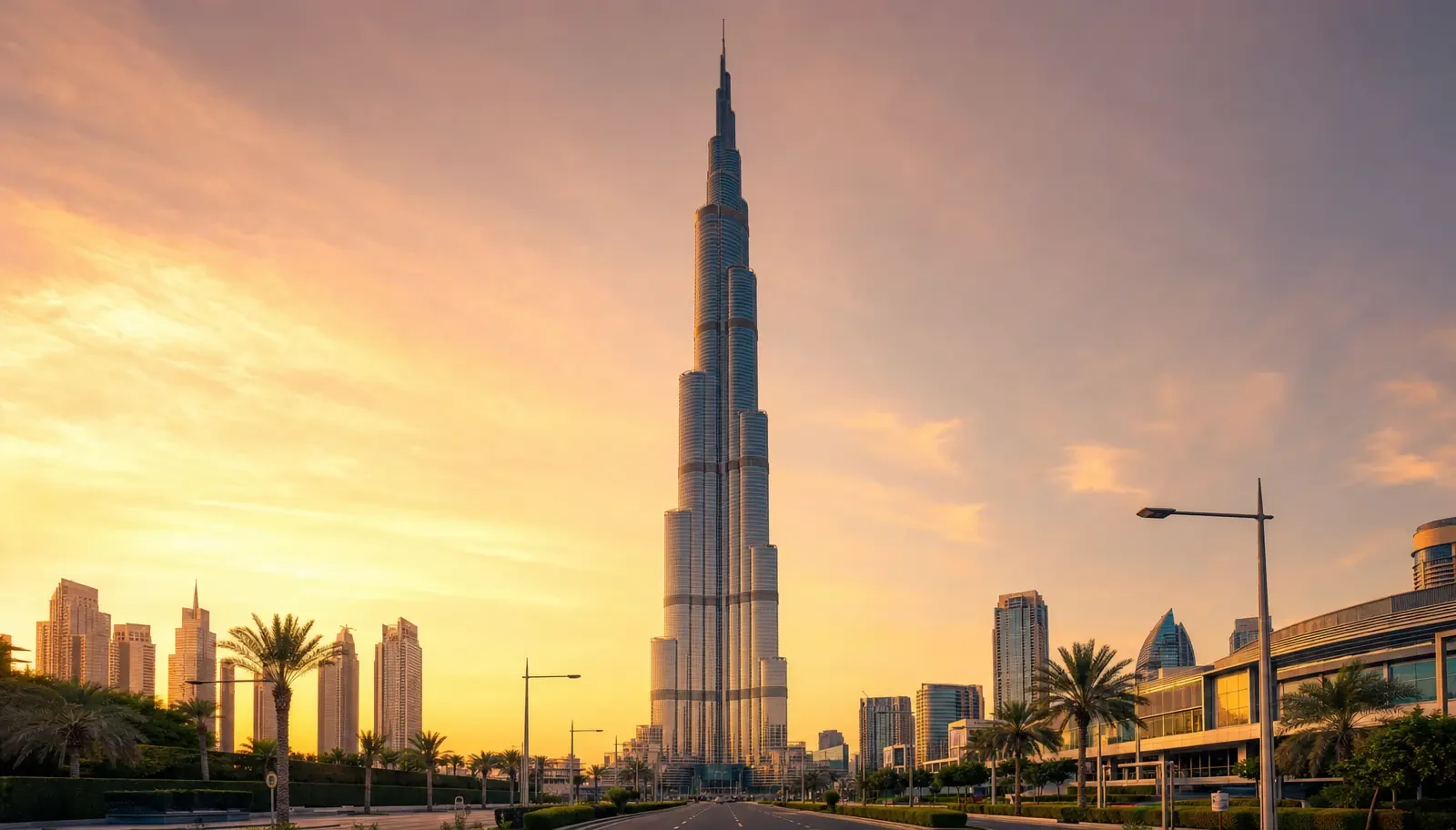
- 828mBurj Khalifa, Dubaiarchitectural height, 163 floors, completed 2010CVU
- 4yearsThe Shard office lease-up2013 completion to fully let on 2 October 2017The Shard
- 258EUR mDebt against Varso Towerpart of a EUR 510m Varso Place refinancing, September 2025Property Forum
- 9.2Dh bnEmaar recurring revenue 2023malls, hospitality, leisure and leasing, over 34% of total revenueThe National
Holding the argument inside one of its own subjects was deliberate
CMS is a Varso Tower office tenant, not a neutral host. HB Reavis lists the building at 70,000 sqm of office space and 85% leased, with a tenant roster that includes:
- Baker McKenzie and Greenberg Traurig
- SAP and Box
- Inditex and PageGroup
- Enterprise Investors and AFI Europe
- Foster + Partners, the practice that designed the tower
The room, in other words, was 42 floors up inside a live case study, with the architect of the building on the tenant list.
Height is the least interesting number in the comparison
The CVU record gives the three towers in the series so far:
- Varso Tower, Warsaw: 310 m to the tip, 53 floors, highest occupied floor at 230 m, completed 2022. Developer HB Reavis, architect Foster + Partners, which calls it "the tallest tower in the European Union".
- Burj Khalifa, Dubai: 828 m architectural height (829.8 m to the tip), 163 floors, highest occupied floor at 585.4 m, completed 2010. Developer Emaar Properties, designed by Skidmore, Owings & Merrill.
- The Shard, London: 306 m, 73 floors above ground, observatory at 244.3 m, completed 2013. Architect Renzo Piano Building Workshop, developed by Sellar.
Read as a ranking, that list says one thing. Read as three business cases, it says three. The useful question is not how tall each tower is. It is what each one returned, how long the return took, and which part of the building paid first.
Dubai monetised the district, not the tower
Burj Khalifa anchors Downtown Dubai, and the return shows up in Emaar's recurring line rather than in the tower's own rent roll. Emaar reported recurring revenue from malls, hospitality, leisure, entertainment and commercial leasing up more than 26% to Dh9.2 billion in 2023, over 34% of total revenue, in a year Dubai recorded 17.15 million international visitors. The following year the group posted revenue of Dh35.5 billion, up 33%, with property sales of Dh70 billion and 111 million visits to Dubai Mall.
Those are district numbers, not tower numbers. The building supplies the reason to come; the mall, the hotels and the leasing portfolio collect. European sponsors reading that as a template should note the precondition: a single owner controlling the tower, the retail, the hospitality and the public realm around all three.
London took four years to fill the offices
The Shard's 26-floor office complex was not announced as fully let until 2 October 2017, with 31 businesses in occupation. CVU records the building's completion in 2013. That is a four-year absorption period for a building at one of London's largest transport interchanges, in the deepest office market in Europe.
The View from The Shard, the building's viewing gallery, sits at 244.3 m on the CVU record and was open to paying visitors from 2013. It was therefore trading for four years while the office floors below it were still being let. That is the sequencing point the series keeps returning to: in a mixed-use tower the visitor attraction and the office stack are two businesses on two clocks, and only one of them can be filled by a ticket queue.
We have always had a clear vision for The Shard: to create a vertical city with a diverse range of use classes and a varied community of occupiers.
Michael Baker, CEO, Real Estate Management (UK) Limited
The lesson is not that The Shard underperformed. It is that a landmark tower prices its space against a market that takes years to accept a new address, and that the public-facing floors reach cash flow on a different clock from the office floors. Anyone modelling the current London pipeline should treat a multi-year lease-up as the base case rather than the downside scenario. The same absorption question sits underneath who leases the top floors.
Warsaw ran the plays in sequence, not in parallel
Varso Tower completed in 2022 and reached 85% leased before it opened to the public at all. The observation deck, Highline Warsaw, opened on 9 September 2025 at 230 m on the 53rd floor, operated by Magnicity under a 20-year lease from HB Reavis. Three years passed between completion and public access.
Reversing that order is the expensive mistake. A deck opened into a half-empty building sells the same ticket at the same price, but it does it while the asset still carries lease-up risk and while the lender is still pricing the loan against unlet space. Warsaw took the slower route and arrived with both halves stabilised. The same logic governs the mixed-use stacks discussed in vertical living, where the residential floors and the commercial base rarely absorb at the same rate.
The capital markets validated the sequence before the tourists arrived. In September 2025 HB Reavis refinanced Varso Place with EUR 510 million across a seven-bank consortium for five years, up from an original EUR 475 million, with EUR 258 million allocated against Varso Tower itself. A mid-size capital filled the offices first, refinanced on the strength of that, then sold the view. That ordering is the substantive part of the Warsaw skyline story.
Winners & losers
Who gains from the tall-tower model as these three buildings actually ran it:
- Owners with district control, who capture retail, hospitality and visitor spend rather than tower rent alone
- Anchor tenants signing early into an undersupplied prime bracket, on terms a full building never repeats
- Cities acquiring a public deck at the top, which arrives as an amenity funded by someone else's balance sheet
- Lenders refinancing a stabilised tower, as the EUR 258 million Varso Tower tranche shows
Who carries the cost:
- Equity underwriting the lease-up gap, which ran four years at The Shard
- Speculative developers without a pre-let, exposed for the full absorption period
- Occupiers in the second wave, who pay the rent the anchor was excused
- Any sponsor importing the Dubai model into a European city without owning the district around the tower
What to watch, and when
Edition two of the series pairs Burj Khalifa & The Shard in London. It has been postponed to 2027 and a new date has not been set. The comparison survives the delay, because it is the sharpest version of the question: a state-backed 828 m landmark that turned a district into an annuity, set against a 306 m tower that took four years to fill and whose viewing gallery was trading long before its office floors were full.
Three dates carry the next chapter. Highline Warsaw's first full trading year closes in September 2026, which will show whether a 230 m deck in a mid-size capital sustains volume beyond its opening curiosity. Varso Tower's refinancing runs to 2030, which sets the horizon for the next Warsaw pricing test. And the next RealTimes event, Expo Real Aftertaste 2026 Warsaw on 15 October 2026, lands three weeks after the Munich fair, where the European tower pipeline gets repriced in public.
The honest version of why height still matters is not the number in the CVU table. It is what that number bought, how long the money took to arrive, and which part of the building paid first. That is a rent-premium question on the way up, an absorption question in the middle, and eventually a question about what happens when a tower ages. The economics of height answers it differently in each of these three cities.
More from this edition: Skyscraper Day Dive.