



TL;DR
- Gulf sovereign wealth funds deployed a record $119 billion in 2025, and about 28% of Mena sovereign capital in the first nine months went to Europe, including the UK.
- Dubai's own market closed 2025 at AED 917 billion ($249.7 billion) in transactions across more than 270,000 deals, drawing buyers from over 200 nationalities.
- IPS 2026 (7-9 September, Dubai World Trade Centre) is where both directions of this corridor meet: Gulf money looking outward, and a European property industry looking in.
Gulf money has always travelled. What is new is the pace and the direction. In 2025 the region's seven largest sovereign wealth funds spent a record $119 billion, up 43% on the year before, according to the consultancy Global SWF. Roughly 40% of what state investors deploy goes into real estate and infrastructure.
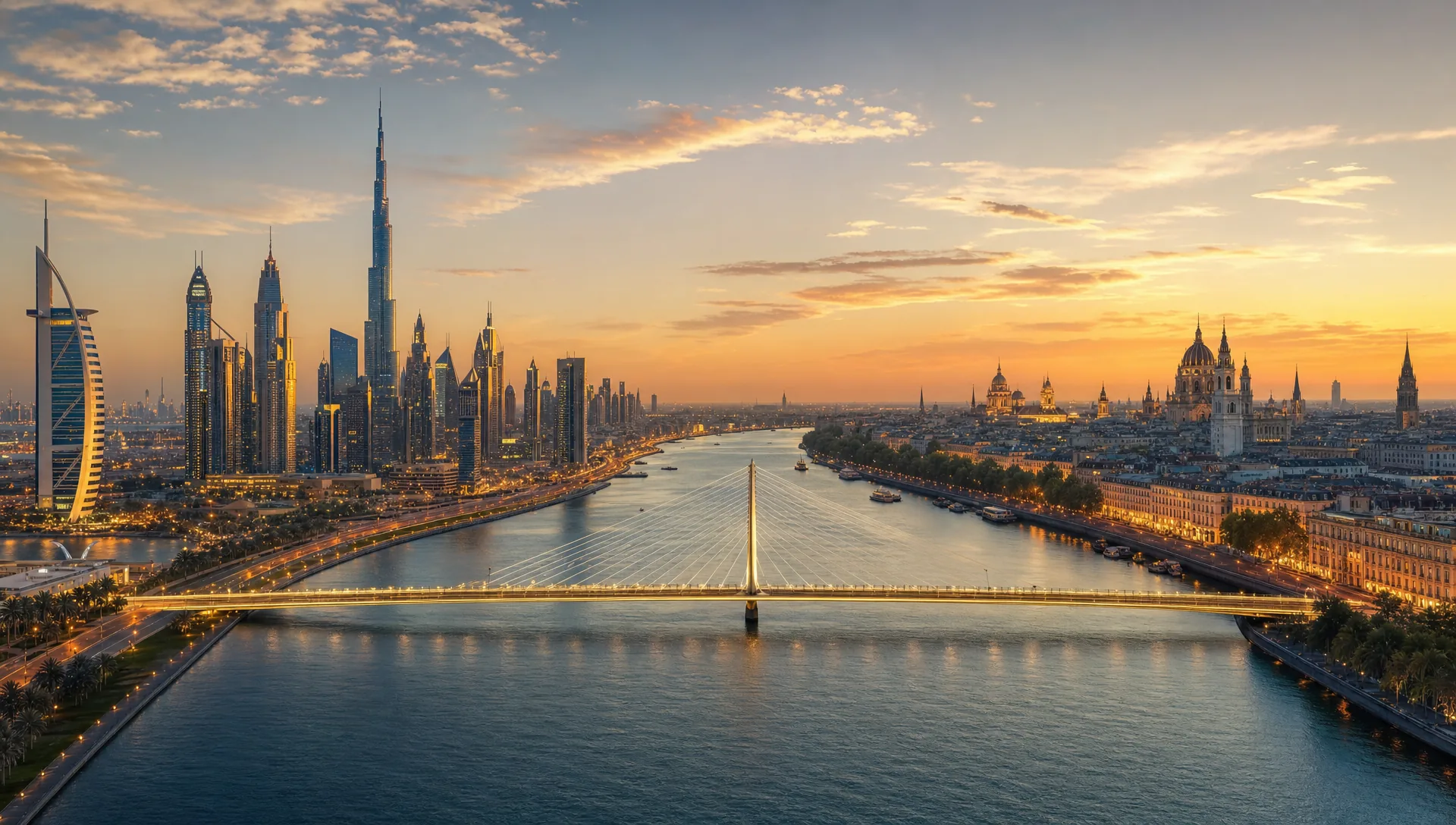
This is no longer a one-way street. Gulf money is looking for Europe, and Europe's property industry is looking for Dubai.
An outbound wave, measured
The scale is now countable. Mena sovereign wealth funds deployed $56.3 billion across 97 transactions in the first three quarters of 2025, and 28% of that capital went to Europe, the UK included. The most active was Abu Dhabi's Mubadala, with just under $34 billion across 41 deals.
A credible gateway to Europe, closely connected to the governments.
Stefan Hoops, CEO, DWS Group
European property is a visible beneficiary. Three examples across 2025 and 2026 show the pattern:
- Mubadala, with a consortium, acquired Germany's Techem in a €6.7 billion deal centred on building energy efficiency.
- In August 2026 Mubadala committed up to €600 million to ADD Capital-managed European housing funds, targeting rental homes, student accommodation and value-add strategies.
- DWS, the asset management arm of Deutsche Bank, is in talks with Gulf funds over European real estate, private credit and infrastructure, including a €1 billion mandate with Qatar's Al Mirqab Capital.
Why Europe, why now
The European market has recovered. Commercial real estate investment in Europe climbed to €241 billion in 2025, up 13% on 2024, according to CBRE. Repriced assets, falling interest rates and a weaker dollar against the euro opened an entry window. For Gulf investors the UK remains a safe haven: the bank BLME estimates GCC inflows into UK commercial real estate will reach £3.4 billion by the end of 2026.
The Dubai engine
The other end of the corridor is just as strong. Dubai closed 2025 with real estate transactions worth AED 917 billion ($249.7 billion), up 20% year on year, and its investor base widened to 193,100 people. The city is working toward its Real Estate Sector Strategy 2033, which aims to lift transaction value by 70% to AED 1 trillion. Buyers come from more than 200 nationalities, and foreign investors account for over 40% of residential ownership. A tokenization pilot launched by the Dubai Land Department in March 2025 is opening the market to fractional digital ownership.
A two-way corridor
The interesting part is not that Gulf money flows to Europe. It is that the traffic is starting to run both ways. European operators, advisers and capital are seeking Dubai exposure, while Gulf funds build positions in London, Frankfurt and Madrid. Europe's own advisory community sees it too, increasingly describing the Europe & Gulf relationship as a standing capital corridor rather than a one-off flow. IPS 2026 is where that corridor gets brokered.