



TL;DR
- Dubai is the world's largest branded-residence market: Savills counts 64 completed schemes and 87 in the pipeline at the end of 2025, and market-intelligence firm Global Branded Residences puts the city's total stock at 132 projects with more than 43,000 units.
- Buyers pay a premium for the name: Savills puts the global average at 33%, and in Dubai other market analyses put it at roughly 40% against comparable non-branded property.
- The model is exporting to Europe, where the project count is set to more than double by 2032 and London leads among European cities. IPS 2026 (7-9 September, Dubai World Trade Centre) is where this segment is put on sale.
A branded residence is a simple arrangement. A developer partners with a hotel, fashion or automotive brand, and buyers pay more for the name and for the managed services behind it: concierge, housekeeping, spa, sometimes the option to place the unit into hotel inventory. The segment has stopped being a niche. Knight Frank counts schemes rising from 169 in 2011 to 611 in 2025, with a forecast of 1,019 by 2030. Savills, counting on a different basis, puts the total at 910 projects by the end of 2025, up 19% year on year.
The Dubai engine
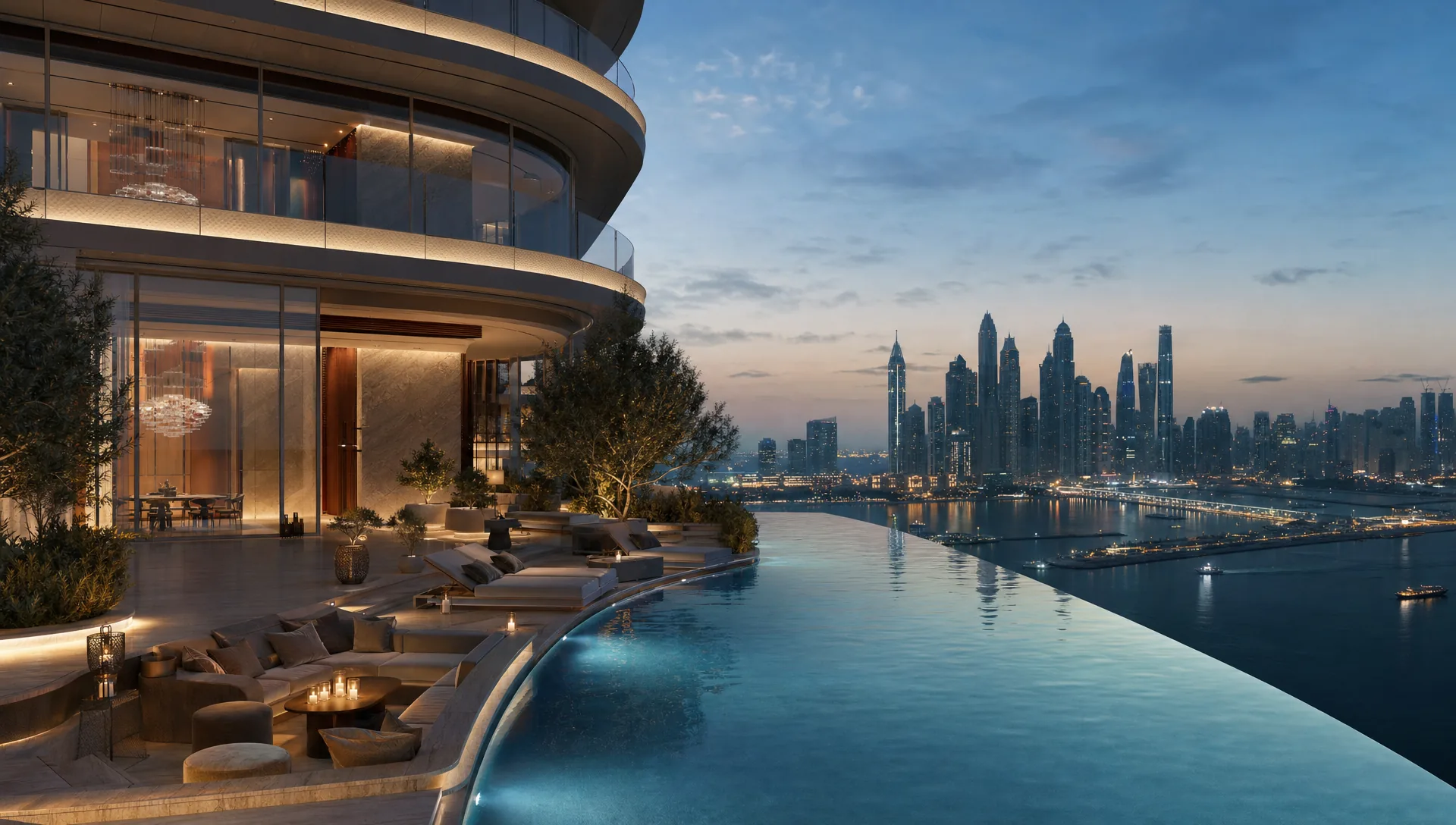
Dubai has pulled ahead of everyone. On Savills's city ranking it sits first, ahead of Miami, New York, São Paulo and London. Separate market-intelligence data from Global Branded Residences puts the city's stock even higher, at 132 projects with more than 43,000 units. Ultra-wealthy demand drives it: Knight Frank recorded the highest total of $10 million-plus home sales anywhere in the world in Dubai in the first half of 2025.
The branded-residence market in numbers
- 611Branded schemes worldwide in 2025, up from 169 in 2011, with 1,019 forecast by 2030.Knight Frank
- 132Projects in Dubai, the largest branded-residence market in the world, carrying more than 43,000 units.Khaleej Times
- 33%Global average price premium a buyer pays for the badge. In Dubai other analyses put it nearer 40%.Knight Frank
- 83%Share of existing branded residences that carry a hotel brand, despite the fashion and automotive noise.Knight Frank
Shaping destinations where our brand becomes something you can truly call home.
Mathias Geisen, Board of Management, Mercedes-Benz Group AG
Why the premium
The premium is real and countable. Savills measures a global average of 33%, and in Dubai other market analyses put it at roughly 40% against comparable non-branded homes. For a developer wrestling with high land and build costs, that premium can be the difference between a scheme that stacks up and one that never leaves the drawing board. Despite the impression that fashion and car marques run the market, its core stays hotel-led: Knight Frank finds 83% of existing residences carry hotel brands. Non-hotel entrants, though, are arriving with intent:
- fashion, including Armani, Missoni, Fendi, Elie Saab and Karl Lagerfeld,
- automotive, including Bentley, Aston Martin, Lamborghini, Pininfarina and Mercedes-Benz,
- other categories, from restaurants (Nobu) to watches (Jacob & Co.) and wellness (SHA).
The loudest example is Mercedes-Benz Places | Binghatti City, announced as the world's first Mercedes-Benz branded city. The AED 30 billion project in the Meydan area spans twelve towers across more than 10 million square feet and was formally unveiled in January 2026.
The European export
The interesting part is that the model is travelling back to Europe. Savills counts 141 European schemes at the end of 2025 and forecasts more than 300 by 2032. London leads among European cities, although at a national level Spain and Portugal have now overtaken the UK. The European premium runs higher than the global one: Savills reports 38%, up from 29% a year earlier.
The badge on the building is a trust mark: for the buyer it lowers risk, for the developer it justifies the premium.
Non-hotel brands are entering here too. Nobu opened its first residences in the Netherlands and in Manchester, and Maybourne is launching the first such project in Paris, long treated as the impossible city on planning grounds.
For European operators, advisers and capital the signal is clear. The badge as a trust mark works the same in Dubai as it does in London or Lisbon, and the premium it unlocks is even higher in Europe. IPS 2026 is where Gulf developers display the product, and where Europe's industry can see where its own market is heading.