
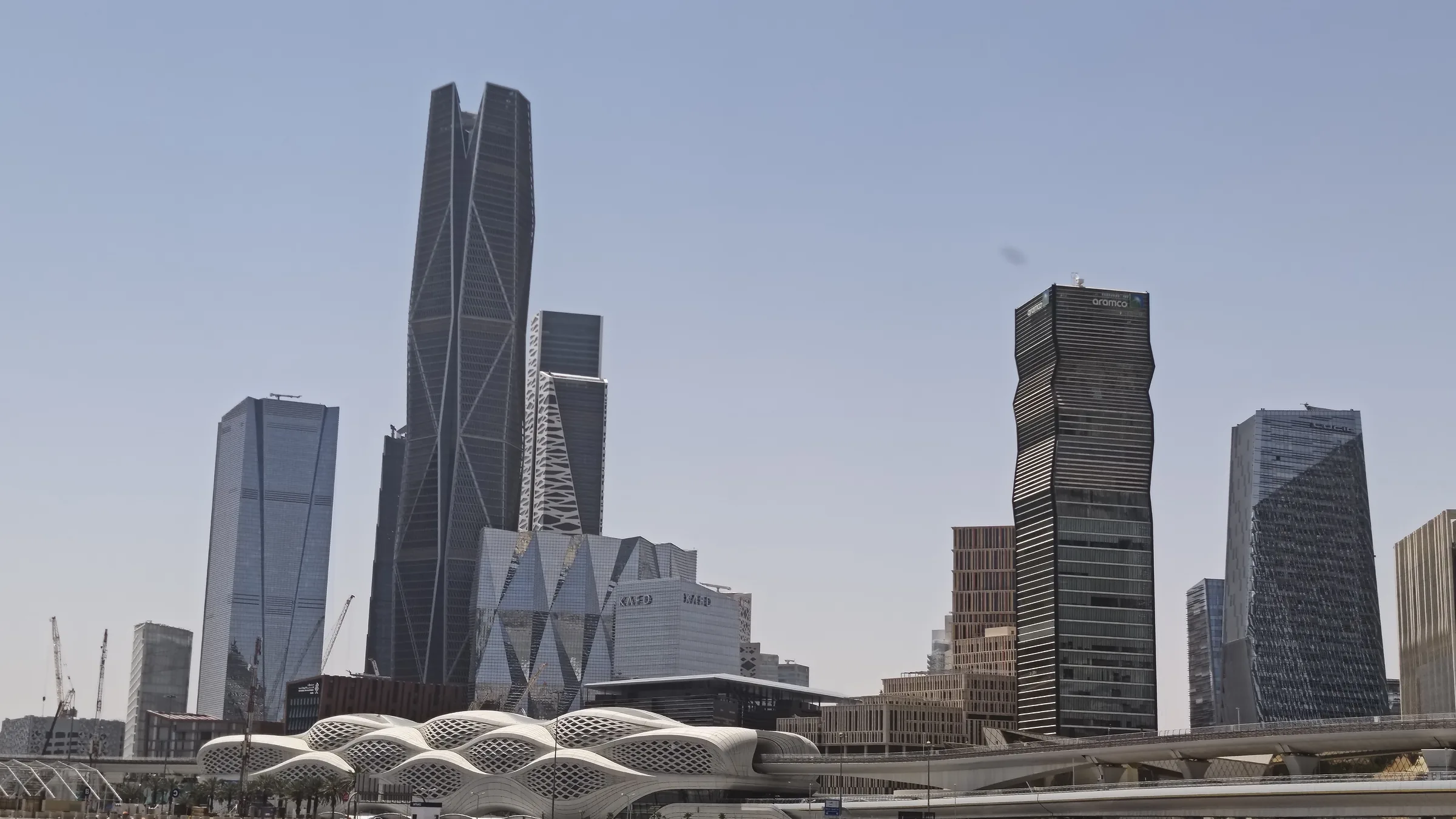
Riyadh's Grade A offices were 98% occupied in Q2 2026, and Dubai's prime availability was 0.7%. The headline contest between the two cities counts licences, but offices count people. Riyadh is filling quickly because its rule has teeth, while Dubai keeps an established place to live and run regional operations. The two cities may be complements for longer than they are rivals, and the evidence on where teams sit is thin.
What does the Saudi rule require?
Companies must keep a licensed regional headquarters in the Kingdom if they want to contract with Saudi government entities, with limited exceptions. DGA Group describes the rule, which the Ministry of Investment released as a draft for public consultation in September 2025. The programme was announced in 2021 and implemented in 2024.
The rule links a licence to a commercial reward. That is why it works. A firm that wants the contract needs the licence.
How many firms have licences?
Counts differ by source and period, and we found no single official total for 2026. Two dated figures are available:
- The Ministry of Investment granted 34 regional headquarters licences in Q2 2025, according to its quarterly monitor as reported by Arab News.
- Savills says more than 700 global companies had established regional headquarters in Riyadh as of early 2026, above the Vision 2030 target of 500.
Other counts circulate that we could not trace to a primary source, so we do not use them.
A licence is a registration. It does not say how many people sit in the office.
How full is Riyadh?
Very full. Savills reports Grade A occupancy of 98% in Q2 2026, and Zone A prime rents of SAR 2,483 per sq m. That is up 2% on the quarter and 6% on the year.
New space is coming. Savills says more than 570,000 sq m of new Grade A space is scheduled from late 2026 onward, which should ease availability over time. Different consultancies measure prime rents differently, so we use one source and one definition.
Full offices with new supply on the way is a healthy picture for a landlord. It also tells an occupier that space is tight today.
Where do teams actually sit?
This is the question the data cannot yet answer. A firm can hold a Riyadh licence, place a senior team there, and run much of its operations from Dubai. Some advisers describe this pattern. We have not found a measured count, so we treat it as a hypothesis.
The factors that push teams one way or the other are practical:
- Where staff want to live, and how easy housing is to find.
- Where clients and partners are, and how often they meet.
- How much of the work must be done in the Kingdom to satisfy the rule.
What does Dubai offer in return?
Dubai is tight too. JLL data reported by Khaleej Times puts prime space availability at 0.7% in Q2 2026 and citywide vacancy at 6.1%, down from 7.7% a year earlier. Savills reports average market rents stable at AED 238 per sq ft in Q2 2026, the first quarter without rental growth since the first half of 2021.
So both cities have little spare space. For a firm choosing between them, price and supply matter less than people. Dubai's case rests on an established base for talent and on a deep pool of regional operations already in place.
Rents tell the same story of tight supply. The JLL data reported by Khaleej Times shows Dubai prime rents up 13.6% on the year, Grade A rents up 26.2% and Grade B rents up 31.5%. Grade B rising faster than Grade A suggests that tenants priced out of the best buildings are moving down the quality ladder, not leaving the city.
For a firm planning a Gulf footprint, three questions follow from the numbers:
- Which city has space in the quality and size the team needs, and when?
- Which city lets the team recruit and keep its people?
- Which lease length fits a rule that may change?
The third question is easy to miss. The Saudi regime is still being formalised, as the draft rules of 2025 show. A short, flexible lease in one city may be a reasonable hedge while the rules settle.
The evidence supports a cautious reading. Riyadh looks to be gaining real firms with real staff. Savills reports firm demand for Riyadh space, which suggests people are arriving as well as paper. But the size of the split between the two cities is unknown, and it will differ by sector and by firm.
A software company with a Saudi government client may place its sales and delivery leads in Riyadh and its engineers elsewhere. A bank may place a regional head in Riyadh and keep its trading and operations team in Dubai. These are plausible examples, not measured ones. Each would add to Riyadh's licence count while leaving Dubai's office demand largely intact.
Dubai's own signals point the same way. Prime space there is almost fully let, and vacancy across the city has fallen year on year. That does not look like a market losing its occupiers to a neighbour. It looks like two tight markets, each absorbing demand that the other cannot house.
The evidence also cuts the other way. Riyadh's 98% occupancy shows that real demand for desks exists there, and demand for desks comes from staff. If teams were staying in Dubai in large numbers, we would expect less pressure on Riyadh space. That is why we call the "licence versus team" split a hypothesis and not a finding.
What would settle it?
Three measures would turn the argument into evidence:
- Headcount by city for firms that took a Riyadh licence, before and after.
- Dubai leasing demand from firms that also hold Saudi licences.
- Lease terms in both cities, to see who commits for longer.
That is the data available today. A firm that can show the opposite would change the picture.
What to watch
- Savills and other consultancy updates on Riyadh occupancy after new supply arrives.
- An official licence total from the Ministry of Investment.
- Dubai leasing by firms with Saudi licences.
- Rent trends in both cities over the next two quarters.
 What Dubai tenants now ask of landlords, and which landlords say yes
 Free zone or mainland? The answer now depends on where your revenue comes from, and which authority is your landlord
 Moving to Dubai? Why new firms tend to start with a small office
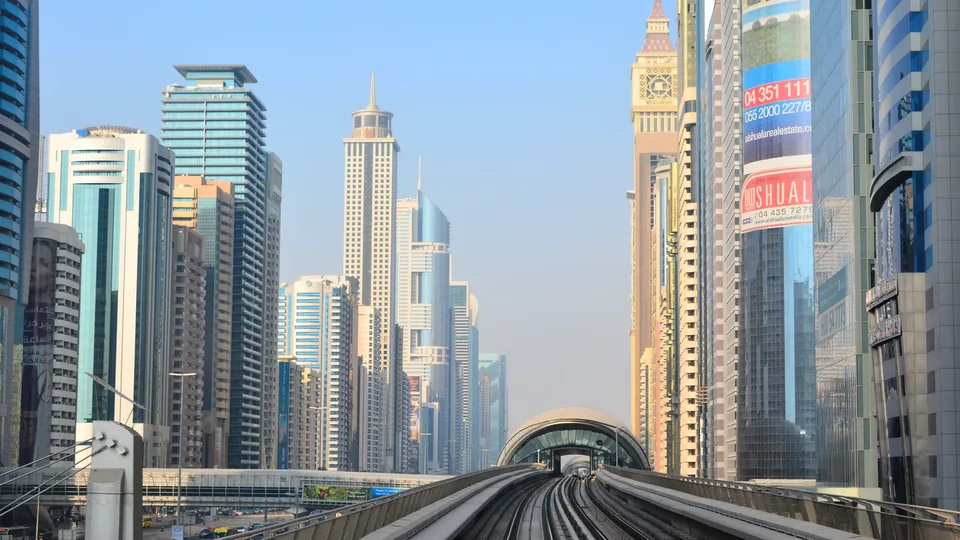 Dubai's office supply wave is coming. The real question is who will own it
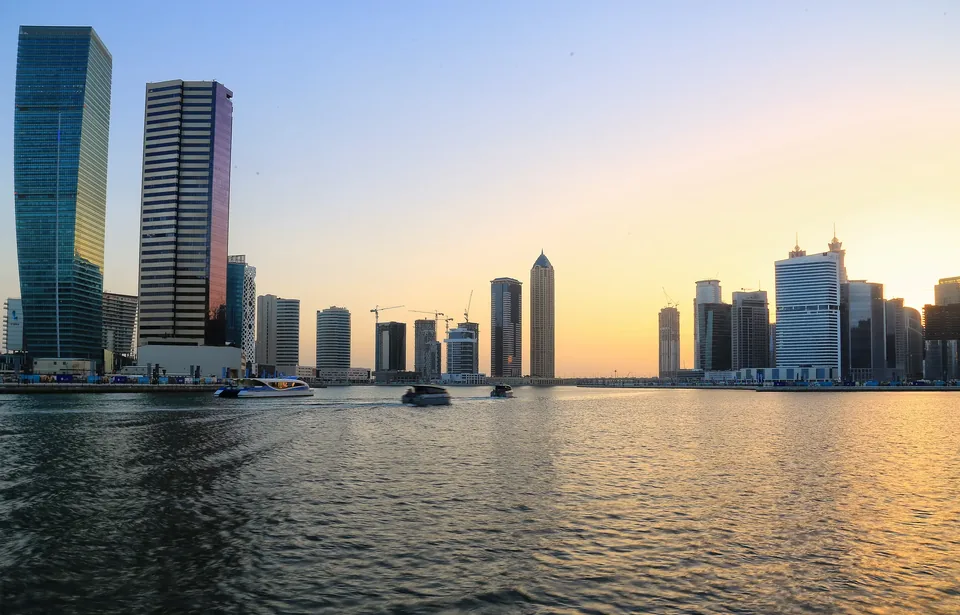 Dubai's big tenants want one landlord. What does that leave the buyer of a single floor?
 Why Dubai landlords are bringing flex operators into large floorplates
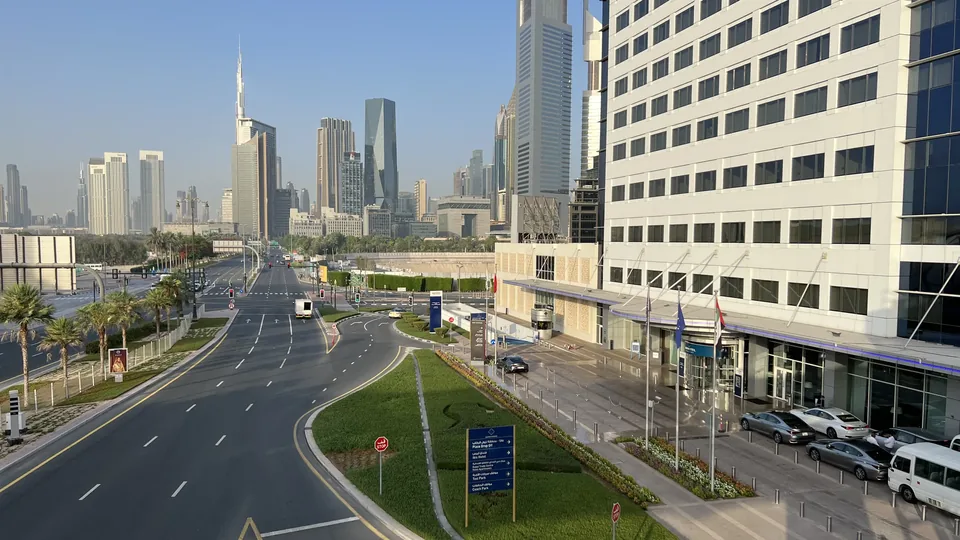 UAE banks are healthy but choosy. So who will fund Dubai's office owners?
 Who really owns Dubai's offices? The public record is thin, so read the deals
 Has Dubai's office market peaked? The evidence points to a pause, not a top
 Millionaires are heading to the UAE, but the route to office demand is indirect
 Gulf investors know what a London office is worth. Why is a Dubai tower so hard to price?