TL;DR
- KLP Eiendom has agreed to buy the Waterfront Building in central Stockholm from MEAG for about SEK 5.4bn in gross property value, the largest deal in its history (KLP).
- Office investment in Madrid and Barcelona reached €1.962bn from January to September, up 21% and the best result for the period since 2019, according to CBRE data reported by El Mundo.
- Across the six largest CEE markets, commercial property investment rose 22% to about €8.8bn in nine months, Colliers says (Eurobuild CEE), while Bucharest's prime office rent climbed 9.5% to €23 per sq m a month (Property Forum).
In one week, from Stockholm to Bucharest, the news from Europe's office markets pointed one way. Investors are coming back for the best buildings in the best locations. The reason is less a boom in demand than a shortage of the space tenants and buyers actually want.
What is KLP buying in Stockholm?
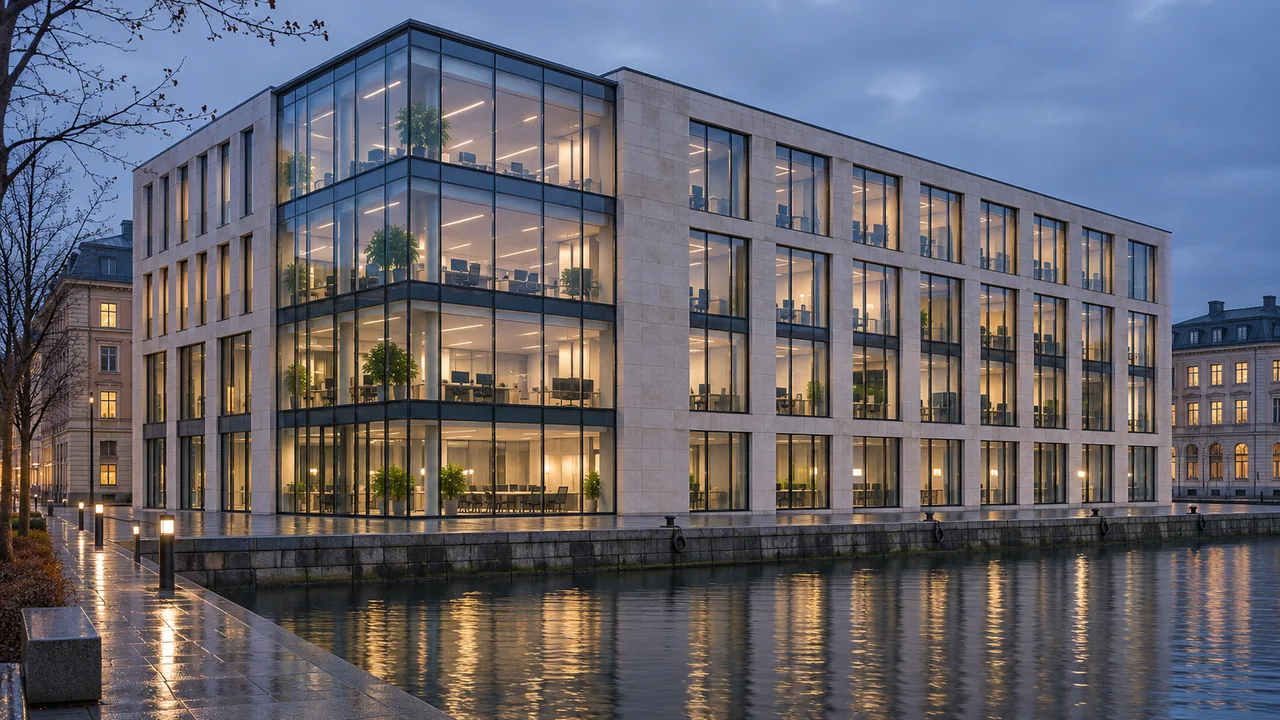
KLP Eiendom is the property arm of Norway's largest pension company (KLP). It has agreed to buy Bangårdsposten 1 from MEAG: the office part of the Stockholm Waterfront complex beside the central station. The price is about SEK 5.4bn in gross property value for about 25,800 sq m, over 90% of it offices, with annual rent of about SEK 229m (KLP). Handover is planned for 1 December (KLP).
KLP already owns the hotel and congress building next door, so the deal makes it sole owner of the whole complex (Fastighetsnytt). The price works out at about SEK 210,000 per sq m, and the deal is one of the largest single-property transactions in Swedish history, according to Fastighetsvärlden statistics.
The buyer matters as much as the price. Finansavisen notes that Norwegian life insurers mostly buy with equity alone, and that this single purchase roughly doubles what KLP Eiendom had invested so far this year.
Why is money flowing back to Madrid and Barcelona offices?
Office investment in Madrid and Barcelona reached €1.962bn in the first nine months, 21% more than a year earlier and already over 90% of the capital invested in offices in all of 2025, according to CBRE data first reported by El Mundo. Add owner-occupier purchases and deals for a change of use, and capital aimed at office buildings passed €2.5bn (El Mundo).
Leasing tells a more careful story. Take-up across both cities fell 7% to 574,000 sq m (Capital). CBRE describes a strong polarisation, with demand concentrated in the highest-quality buildings and the most established locations (Capital). In Madrid, availability fell to 9.6%, below 10% for the first time since 2020, and prime rent in the central business district reached a record €46 per sq m a month (EjePrime).
What do the CEE figures show, and what do they not?
Colliers puts commercial property investment in the six largest Central and Eastern European markets at about €8.8bn in the first nine months, up 22% from €7.2bn a year earlier (Kinnisvarauudised). That total covers all commercial property, not only offices. Offices and retail each drew about €2.5bn, and regional investors supplied about €4.3bn, almost half of the total (Eurobuild CEE).
Colliers says investment decisions now rest on income, asset quality and rental growth rather than on expected yield compression (Eurobuild CEE). Prime office yields stood at 6.25% in Warsaw and 5.25% in Prague at the end of the third quarter, against 4.92% in Germany's four biggest cities (bne IntelliNews). Colliers expects about €12.5bn for the full year (3e-news), the bottom of the €12.5bn to €13bn range it gave in July (bne IntelliNews). In offices, Colliers says quality buildings in good locations can benefit from limited new supply (3e-news).
Prime office yields at the end of September 2026
Why are Bucharest rents rising while leasing slows?
Bucharest shows the supply side most clearly. Prime office rent reached €23 per sq m a month in the third quarter, up 9.5% from €21, against average growth of 5% across Europe and 7.3% in CEE, according to Cushman & Wakefield Echinox (Romania Insider).
The city had two years with almost no new supply (Property Forum). The first large delivery, One Technology District, came in the third quarter: 21,500 sq m fully let to Infineon Technologies (Forbes Romania). Vacancy stands at 11.6%, down 1.2 percentage points from 12.8% a year earlier, and below 5% in the central business district (Forbes Romania).
Demand is not booming. Take-up fell about 18% to about 162,000 sq m in the first nine months (Property Forum). About 195,000 sq m is under construction, for delivery through the first half of 2028 (Property Forum). The figures come from a single consultancy.
Why it matters
Our view: across these markets, investors are buying scarcity rather than a broad recovery. Capital rose 21% in Madrid and Barcelona while take-up fell 7%, and Bucharest rents rose 9.5% on take-up down 18%. If Madrid availability stays below 10% and Bucharest's 195,000 sq m pipeline arrives slowly, then owners of the best buildings keep pricing power. If that pipeline lands while demand stays cautious, then rent growth could cool first outside the core districts.
If CEE prime yields hold near 6.25% in Warsaw and 5.25% in Prague against 4.92% in Germany's four biggest cities, then the region keeps its income premium for buyers such as the regional investors behind almost half of the €8.8bn. If more buyers that fund mainly with equity, as Finansavisen says Norwegian life insurers do, step in, then rare central assets may change hands without waiting for cheaper debt.